

If you are sorting out women's motorcycle gear for first-timers, start with coverage that fits, not a matching look. A helmet, eye protection, gloves, a jacket, pants, and boots should stay put when you reach the bars. Add weather layers after that core kit works together. You do not need every accessory on day one. Hot Leathers has been on the rally circuit since the 1970s, and the same rule still holds. Buy gear that fits the ride, at a fair price, and leave the extras until they earn a spot.
What women's motorcycle gear for first-timers should cover first
A useful first kit covers your head, eyes, hands, torso, legs, and feet, in that order. The motorcycle, the weather, the route, and the rules where you ride decide the details. Even a short trip exposes you to wind, road debris, and a real drop in temperature once you are moving. Ordinary clothes are not riding gear simply because they cover skin.
Buy in this order, and do not skip ahead for a graphic or a color:
- Helmet and eye protection. These go on before anything else. A helmet meant for the motorcycle, with a clear shield or separate eye protection, is the first purchase.
- Gloves. You need a pair that lets you work the levers and grips without bunching in the palm.
- Jacket. Cover the torso and arms in a real riding posture, sleeves over the wrists.
- Pants. Long pants that stay put when you sit and lean, not a pair that rides up at the knee.
- Boots. Sturdy footwear that covers the ankle and lets you find the pegs and controls.
- Weather layers and extras. Rain, warmth, hearing protection, and storage come after the five pieces above fit and feel usable.
If a licensing class hands you a clothing list, follow that list first. Some programs name exactly what a student has to bring. The Utah Driver License Division's handbook section on preparing to ride treats protective clothing and eye protection as part of choosing the right gear. Check your own state's current rules too. They are not the same everywhere.
How a first-time rider chooses a helmet
Choose a helmet intended for motorcycle use that meets the safety requirements where you ride. Read the label and the product documentation instead of trusting a low price, a paint job, or a one-line claim. The shell should sit level, feel snug all the way around, and stay in place when you turn your head gently. It should not create a sharp pressure point or slide down over your brow.
Keep it on for several minutes. A ten-second try-on hides a hot spot that shows up on the ride home. Shape and size change by model. If you wear glasses, put them on inside the helmet before you decide. Work the shield. See whether it fogs in the weather you actually ride. Fasten the chin strap the way the maker tells you to. A helmet that is loose, painful, or hard to buckle will not be the one you wear every day.
Headwear is not a helmet, and it is not a reason to force a bad fit. A thin headwrap can sit under some helmets if the maker allows it and the fit does not change. Bulky seams, knots, and gathered fabric create pressure. Try the full stack before the first ride. A tube, a bandana, or a cap from the hats and headwraps collection is an accessory. It does not protect your head. Compare real helmets in the motorcycle helmets collection instead.
What to look for in a women's riding jacket
A riding jacket has to cover your torso and arms without locking you out of the riding position. Sit on the bike, or a similar seat, while you try it on. Reach the bars, bend your elbows, and turn your head. Sleeves should not pull back and leave your wrists bare. Shoulders should not bind when your arms go forward. Check it standing, then check it leaned over. The cut changes once your arms are out.
Read the construction notes. Some jackets are built for riding and may use abrasion-resistant materials or pockets for impact protection. Others are fashion leather with a biker look. Confirm what is included, what is optional, and whether any protective piece meets a named standard. A heavy hide, a club graphic, or a low price does not tell you the protection level. Quality without the markup only counts when the garment does the job the label describes.
Weather is the next check. Vents help on a hot afternoon. A warmer layer helps when the evening drops. Neither one replaces a clear read of how the jacket is built. Try it over the shirt you will actually wear. Women's jacket cuts at Hot Leathers are sized for a female fit, not a men's jacket taken in. Compare those cuts in the women's motorcycle jackets collection, and use the women's leather motorcycle jackets collection when you want leather only. Measure chest, waist, and hips against that product's chart instead of guessing from a street size.
Related products

with our patented Lockstock Holsters for smooth, secure firearm access
View product
with our patented Lockstock Holsters for smooth, secure firearm access
View product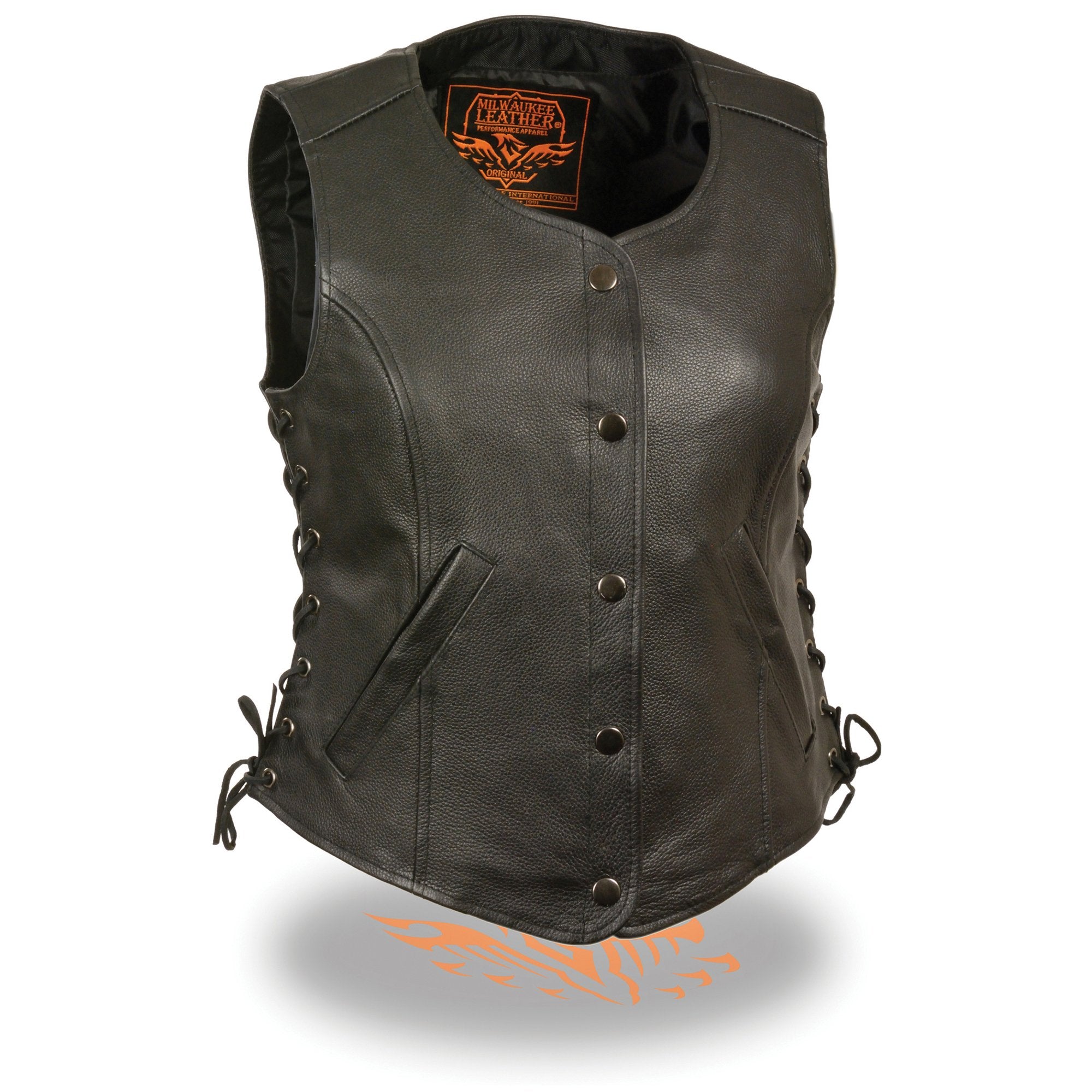
✅ Concealed Carry Functionality | This biker vest is designed with conceal and carry pocket functionality in mind.
View productWhich gloves make sense on a first bike
Gloves should fit closely without cutting off circulation or making the controls hard to operate. With them on, hold the grips, reach the levers, and make the hand signals you use in traffic. Your fingers should land where you expect, and the palm should not bunch. A pair that feels fine at the counter can feel bulky the moment you close your hand on the bar.
Look at the palm, the seams, the closure, and how far the cuff covers the wrist. Match the pair to the weather: a lighter glove for heat, a warmer one when the wind cuts. Read the material notes. Do not guess protection from the product name or the photo. If a glove makes the clutch or the brake hard to use, try another size or another cut before you ride in it.
Do you need motorcycle pants before the first ride
Plan on long pants that stay seated and cover your legs in the riding position. Regular denim is familiar. It is not automatically built for abrasion or impact. If you want that kind of protection, shop pants made for riding and read the maker's notes on material, reinforcement, and armor.
Try them on the bike, with the jacket and the boots. The waistband should stay put. The knees should not pull. The cuffs should work with the footwear, not gap open when you lean. A gap you only see when you reach forward becomes a distraction at speed. Skip loose hems that flap or catch. A riding shirt or a flannel can add a layer and a little style. It is not a jacket. Treat casual tops as clothing, then decide what dedicated outer layer goes over them for the road.
What footwear works when you are new to the bike
Choose sturdy footwear that covers the ankle, stays fastened, and stays out of the way of the controls. The sole should grip the peg. The toe should find the shifter or the brake without a stretch. Tie or tuck laces so a loose end cannot catch. Plant both feet and work the controls while the bike is stopped and supported.
Low street shoes leave the ankle open. Soft or sloppy footwear shifts under you. A purpose-built riding boot can offer features everyday shoes do not, but designs differ, so read the description and try the boot with your riding pants. Hot Leathers already has a full guide on women's motorcycle boots and finding the right fit. Use that for sizing. The job here is simpler: secure coverage, stable footing, and easy control use. The look comes second.
How to dress women's motorcycle gear for changing weather
Airflow, shade, speed, and a fast weather change can make a ride feel nothing like the forecast. Pack layers you can add or pull at a stop without wrecking the fit of the protective pieces. A bulky layer under a close jacket locks your arms. A loose layer over the jacket flaps. Try the whole stack before you leave the driveway.
For rain, use an outer layer made to go over your gear. It should not block your view or your movement. Stow it where you can reach it without unpacking the bike. In heat, vents help comfort, but bare skin is not a stand-in for coverage. In the cold, block the wind and still keep the gloves flexible enough to work the levers.
Accessories have a job, and a limit. A face covering is apparel. It is not eye protection, and it should not block breathing, vision, or helmet fit. A vest extender fixes the fit of a vest. It is not armor. Know what each piece does before you add it to the kit.
How to compare gear before you spend the money
Run the same list on every piece. Compare intended use, coverage, fit, construction, weather, care, and whatever the maker says about protective parts. Price matters to a rider who wants quality without the markup. The cheapest option is not a value if it does not fit, will not work with the rest of the kit, or skips the feature you actually need. A product category alone does not prove protection.
| Gear item | What to compare | Fit check | First-time priority |
|---|---|---|---|
| Helmet and eye protection. | Safety rules, labels, and the shield. | Snug, level, and secure. Try it with glasses. | Essential before you ride. |
| Jacket. | Riding purpose, construction, vents, and included protection. | Reach the bars without binding. Sleeves cover the wrists. | Core riding apparel. |
| Gloves. | Materials, coverage, closures, and weather. | Work the grips and levers. No bunching in the palm. | Core riding apparel. |
| Pants. | Riding design, material, reinforcement, and armor notes. | Check knees, waist, and cuffs while seated. | Core leg coverage. |
| Boots. | Ankle coverage, sole, closure, and riding features. | Use the controls. Plant both feet. | Core foot coverage. |
| Weather layers. | Rain or cold use, pack size, and fit over the base kit. | Wear the full stack. Move naturally. | Add for the route and climate. |
List the essentials, then read each spec and try the fit. If the budget will not cover every upgrade at once, keep the pieces your class requires and the pieces you need to control the bike. Delay the decorative extras. Do not swap a needed item for something that only looks like it.
How to make women's motorcycle gear fit your riding position
Women's sizes are not the same from brand to brand, or even from jacket to pants. Do not order from the letter you wear to the store. Use that garment's chart. Watch shoulder width, sleeve length, torso length, and hip room, and see how it sits when you lean forward. If you can, try it over the layers you will ride in.
A good fit lets you reach the controls, turn your head, and move your arms without a pull or a pinch. Close every zipper and snap while you are seated. If the piece includes armor or padding, see whether it stays where it belongs when you bend an elbow or a knee. If a protective piece shifts, ask how that garment is meant to fit. Do not talk yourself into a bad fit.
Do not treat discomfort as the price of shopping a women's section. Do not assume a men's cut is the only option either. Use that product's size chart, not the letter you wear to the store. If the adjustments on a piece cannot make it secure and comfortable, try another style. The right one fits your body and the riding position, and it does the job the maker describes.
What to check before the first ride
Put the whole kit on at home, or in a safe spot, before you roll out. Fasten every closure. Secure every loose end. Sit on the bike. Then run this list, in order, before you ever leave:
- Helmet. It sits level, feels snug, and the strap is fastened the way the maker says.
- Eyes. The shield or glasses are clear, and you can see without fog or a gap.
- Gloves. You can work the grips, levers, and switches without the palm bunching.
- Jacket, pants, and boots. They stay put when you reach the bars and bend your knees.
- Loose ends. Laces, straps, and drawcords are tied or tucked.
- Layers. Any rain shell or warm layer still lets you move in the full outfit.
- Rules. You have checked the clothing list for your class and the gear rules where you ride.
Take a short, familiar practice ride only after you are licensed or supervised the way your state requires, and only when the bike and the conditions make sense. Stop if a piece shifts, distracts you, or gets in the way of a control. Fix it or replace it before you continue. A quiet lot lets you check reach and movement. It does not replace a skills course.
Mistakes first-time riders make with gear
The usual miss is buying the look first. A color or a graphic can make the kit feel like yours. It cannot tell you whether the helmet fits, the jacket works in a riding posture, or the gloves can run the controls. The next miss is assuming expensive or heavy means protective. Read the product notes. Try the fit. Ignore the single visual cue.
Buying pieces one at a time, and never together, is just as common. A jacket can fit over a T-shirt and bind over a warm layer. Pants can cover the boots while you stand and ride up once you sit. Gloves can feel right in the shop and bunch on the grip. Put the outfit on as a set and test the range of motion before you commit.
Do not let fashion, patches, or accessories stand in for purpose-built protective gear. A graphic shirt, a belt, headwear, or a vest detail can be part of your style off the bike, or under gear that is actually made for the ride. A studded belt and a women's patch are personal expression. Neither one changes what the riding garments do. If you want a patch on a vest later, add it after the core kit is settled. Do not let it replace the kit.
Frequently Asked Questions
Can I wear regular clothes on my first motorcycle ride?
Regular clothes cover skin. They are not built for riding, and they are not tested as protective gear. Wear a helmet and eye protection that match the ride, plus a jacket, pants, gloves, and boots that stay put. Check the class list and the local rules before you leave.
Do I need to buy every item before a riding class?
Read the provider's current equipment list before you register. Many programs name the helmet, clothing, and footwear they require. Follow that list first. Add the rest of the kit for the weather and the riding you plan to do after class.
Should women's motorcycle gear fit tightly?
It should fit secure, not painful, and it should not lock your movement. The right fit depends on the piece and the maker's notes. Try it in a riding position, over the layers you will wear. Do not trust an everyday clothing size on its own.
Is a vest or a headwrap protective riding gear?
Not by itself. A vest or a headwrap is apparel unless the maker names real protective features. It does not replace a fitted helmet, eye protection, or garments built for the ride.
What should I check first after the gear arrives?
Put the full setup on together. Test movement, vision, closures, and control reach while the bike is stopped. Confirm nothing shifts, snags, or gets in the way. Fix the fit before you point the bike at the road.
Build the first kit around fit, clear product notes, and the riding you actually do. Not around a pile of extras. Start with helmet, gloves, jacket, pants, and boots. Test them as one outfit. Add comfort and style only when they work with that core. When you are ready to compare real options, start with the riding gear collection and the women's apparel racks. The motorcycle jackets guide covers jacket shopping in more depth if that is the piece you still need to choose.