

A kutte is a sleeveless motorcycle jacket or vest customized with patches, pins, and other details that reflect a rider's history, community, and time on the road.
A kutte is a sleeveless motorcycle jacket or vest customized with patches, pins, and other insignia. Riders use this durable garment to show personal history, club ties, rally memories, interests, or time on the road. The same style may be called a cut, cut-off, battle vest, or battle jacket in different riding and music communities.
The garment carries real cultural meaning, so customization calls for respect, especially around club colors and placement. Before choosing materials or planning a patch layout, it helps to understand where the term came from and how riders use it. For a deeper look at motorcycle patch culture and the art of building a personalized vest, read Hot Leathers' Motorcycle Patch Culture, Vest Customization, and the Art of the Kutte.
What Is a Kutte and Where Did the Term Come From?
A kutte is a customized sleeveless motorcycle vest, usually made from leather or denim. Riders also call it a cut or cut-off. The garment is a durable canvas for patches, pins, club or rally identifiers, and personal memories. In metal and punk communities, similar patched garments are often called battle vests or battle jackets.
The word kutte comes from the German word Kutte, a term for the garment. That etymology is commonly connected to the cut-off sleeves that define the vest. You can read the background on the term in Archive Vintage's explanation of the kutte, while the broader definition and related names are covered in the Wikipedia entry on cut-offs.
Kuttes are strongly associated with biker culture, where patches and other insignia can communicate affiliation, history, or personal experience. They are also part of metal and punk style, where a battle vest may carry band patches, artwork, and other interests. Those communities overlap in their use of a personalized canvas, but they are not interchangeable. A club vest may follow rules about colors, symbols, and placement, so never copy another club's identifiers or assume that a patch means the same thing everywhere.
- Kutte: The German-derived term often used for a customized sleeveless motorcycle vest.
- Cut or cut-off: Everyday names that describe a jacket altered by removing its sleeves.
- Battle vest or battle jacket: Terms used especially in metal and punk settings for a patched, personalized vest or jacket.
For a non-club rider, a kutte can simply be a personal project and a practical part of a riding setup. Choose a base that fits your use, then let the patches reflect your road miles, interests, and experience. The important distinction is respect: a personalized vest is not automatically club colors. Start with the right foundation by browsing Hot Leathers' leather motorcycle vests.
Leather Kutte vs. Denim Kutte: Which Is Right for You?
Once you know what is a kutte, the next decision is choosing the right base. Leather and denim are the two practical starting points for a sleeveless riding vest, and neither is automatically the better choice. The right one depends on how you ride, how you want the vest to feel, and how you plan to build it out with patches over time.
| Consideration | Leather kutte | Denim kutte |
|---|---|---|
| Overall feel | Has the substantial look and feel many riders expect from traditional leathers. It can become more personal as it is worn and customized. | Feels more casual and familiar, with a classic battle-vest look that works well for personal designs and everyday wear. |
| Riding use | A natural fit when your vest needs to sit alongside other leather riding gear and carry a club-style look. | A flexible choice for layering and for riders who want a lighter, less formal-looking vest in their regular rotation. |
| Customization | A strong base for a deliberate, long-term layout. Plan the placement before sewing, especially if the vest has a structured front or pockets. | An approachable canvas for experimenting with patches, pins, and personal themes before committing to a final arrangement. |
| Long-term build | Choose it when you want the vest itself to be a major part of your riding identity. USA-made premium leather goods from Hot Leathers carry a 5-year warranty. | Choose it when the story is primarily in the artwork and additions, or when you prefer a straightforward base that can evolve with your interests. |
Fit should come before the patch layout. The vest needs to sit comfortably over the layers you normally wear, with enough room for movement and a back panel that gives your main design space. Try the vest on in your actual riding setup rather than judging size over a T-shirt alone. A clean fit also keeps the front pockets usable, which matters when the vest becomes part of your everyday gear.
Leather makes sense for a rider who wants a classic set of leather motorcycle vests that works with the rest of their leathers. For a more defined club-style direction, Hot Leathers also offers a club-style leather vest. Denim may be the better call when comfort, casual wear, and a changing patch collection matter most.
Whichever base you choose, keep cultural details in mind. A personalized vest is not the same thing as club colors or earned insignia. If you ride with a club, follow its guidance on placement, colors, and ownership. If you ride independently, build a layout that represents your own miles, interests, and experiences. The best kutte is the one that fits your riding life and gives you room to keep adding to the story.
The Anatomy of a Kutte: Patches, Pockets, and Placement Zones
A kutte carries a rider's story. The layout should work on the road as well as look right at a rally. Start by treating the vest as a set of usable zones rather than a blank surface. The back gives you the most room for a large central design. The front keeps smaller identifiers and personal details visible. The sides, pockets, and shoulder lines can fill in over time without making the vest feel crowded.
The back panel is the main canvas
The broad back panel is usually the visual anchor. It can hold a large personal image, event design, or club-specific set of colors when the wearer has permission and knows the required protocol. A club back patch is not simply decoration, so do not copy another club's identifiers or assume a layout from one group applies to another. For an independent rider, the back can instead carry a meaningful graphic, rally patch, or design that reflects where they ride and what they care about.
Use the front for identity and everyday access
The chest and front panels are easier to see when you are standing face to face. Smaller patches, name pieces, pins, and earned event markers often work well here. Keep the zipper, snaps, and pocket openings clear. A patch that covers a closure may look fine on a table but become a nuisance when you need a layer, wallet, or gloves quickly. Pocket flaps also need room to open without catching on dense embroidery or nearby pins.
- Upper chest: Reserve a clear area for a name, personal emblem, or other approved identifier.
- Lower front: Use smaller patches or pins, while keeping pockets and closures functional.
- Back panel: Place the largest design or central arrangement here, following any applicable club rules.
- Side seams: Add narrow patches only where they will not rub against straps or restrict movement.
- Pockets and flaps: Leave enough clearance for reaching in, closing the pocket, and layering the vest.
- Shoulder and collar areas: Keep them comfortable under a jacket or backpack strap.
Personal patches are not the same as club colors
A personal patch can mark a rally, support a cause, show an interest, or represent a place and experience that matters to you. Club colors and other earned insignia can carry specific meaning, ownership, and placement expectations. Motorcycle club culture uses symbols as part of group identity and pride, and research on battle jackets also notes that patch placement may follow club-specific protocols. Ask the appropriate people before wearing, moving, or reproducing anything that belongs to a club or organization.
For a personal build, Hot Leathers offers biker patches for a vest and vest pins that let you develop the layout at your own pace. Lay everything out before attaching it, then wear the vest through a normal ride or day out. If a pocket becomes hard to use or a pin catches a strap, the design needs another pass.
How to Start Building Your Own Kutte from Scratch
Building a kutte is a personal project, not a race to fill every inch of a vest. Start with a base that fits comfortably over the layers you actually ride in, then let the layout develop over time. Non-club riders customize vests too, using patches and pins to show their interests, travels, and place in the wider riding community. That is different from copying another club's colors, identifiers, or earned insignia. Respect the difference, and build something that is unmistakably yours. The related Hot Leathers patch culture guide is a useful companion when you want more context on the symbols and stories a vest can carry.
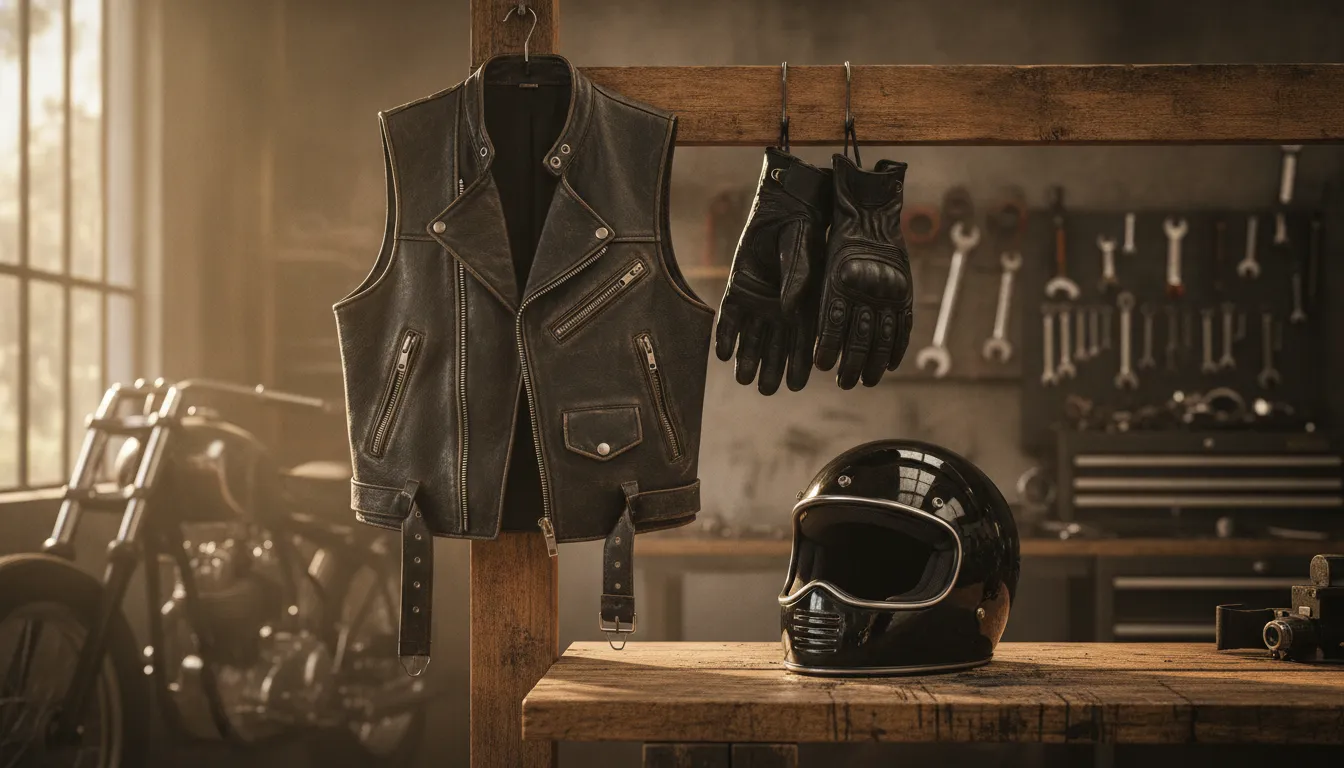
Choose a base that fits the way you ride, then let the layout grow from there.
- Choose the base vest. Begin with a leather or denim vest that fits your shoulders and leaves enough room for a T-shirt, hoodie, or riding layer. Consider the material, pocket access, closure style, and how much surface area you need for the project. A clean, well-fitting base gives every later decision a better foundation. If you want to start with a ready-made option, review Hot Leathers' quality motorcycle vests before choosing.
- Map the layout before attaching anything. Put the vest flat and arrange your patches and pins without fastening them. Photograph a few versions, check the balance from the front and back, and leave enough space for future additions. Think about visibility while seated on the bike, pocket access, seams, and areas that flex when you move. A simple layout plan prevents permanent stitching from turning into a series of unnecessary repairs.
- Check club and local etiquette. If you ride with a club or regularly attend local events, ask the appropriate people about placement. Colors, and symbols before adding anything that could be mistaken for club identifiers. Protocols can be specific, and assumptions are not a substitute for permission. Riders building a personal vest should avoid reproducing another group's patches, arrangements, or identifiers. When in doubt, choose designs tied to your own rides, interests, or experiences.
- Attach patches and pins carefully. Test the placement while wearing the vest, then secure each piece using a method suited to the material and the item. Work patiently around seams, pockets, and thick layers. Keep pins fastened so they do not shift or catch on other gear. For a broader selection of designs, browse Hot Leathers' customizing your biker vest patches. Add pieces in stages instead of covering the vest in one session.
- Wear it, inspect it, and revise. Take the vest on ordinary rides before calling the layout finished. Notice whether a patch rubs, a pin moves, a pocket becomes difficult to use, or the balance looks different in motion. Make small revisions as your riding history grows. The strongest kuttes are rarely finished in a weekend. They become a visual record of the miles, people, and places that matter to the rider.
How Hot Leathers Vest Styles Work for Kutte Builds
The right base sets the direction for a kutte before the first patch is sewn. Hot Leathers gives riders several ways to start, whether the goal is a traditional leather build, a lighter denim look, a club-style foundation, or a USA-made premium piece. The best choice is the one that fits how you ride, what you plan to add, and how you want the vest to age with your experiences.
Leather for a classic riding foundation
Leather is the natural starting point for a substantial kutte. It brings the familiar look of motorcycle leathers and gives a vest a strong visual foundation for patches, pins, and other personal details. A leather base can suit a rider who wants the vest to feel at home with a V-twin, riding boots, and other established gear. Hot Leathers offers a range of leather motorcycle vests for riders building that kind of wardrobe.
For a more specific direction, a club-style cut keeps the silhouette focused and leaves the vest ready for thoughtful customization. That does not mean copying another club's colors or identifiers. It means choosing a straightforward foundation and adding only the patches that genuinely belong to your own story and riding community.
Denim for a flexible, lived-in build
Denim is another practical material for a kutte, especially when the project is centered on collecting and arranging patches over time. It has a familiar everyday feel and works well for a build that grows gradually through rallies, miles, and personal interests. A denim vest can remain simple for a while, then develop its character as the rider decides what deserves space.
This approach is useful for non-club riders as well as club members. Your vest does not need to look finished on day one. Leave room for the pieces you earn, choose, or pick up along the way, and keep club-specific placement rules in mind when they apply.
USA-made options for a long-term investment
Some riders want their base to reflect American manufacturing and Hot Leathers' long rider heritage from the beginning. The company's USA-made premium leather goods carry a 5-year warranty, according to Hot Leathers' customer information. That makes a USA-made option worth considering when you are choosing a foundation intended to stay in rotation and collect meaning over the years.
Whichever material fits your build, keep the customization intentional. Browse biker patches for your kutte, then choose pieces that reflect your rides, affiliations, and interests without borrowing symbols that are not yours.
Shop biker patches for your kutte
Frequently Asked Questions
What is a kutte?
A kutte is a sleeveless motorcycle jacket or vest, usually made by removing the sleeves from a denim or leather jacket. Riders customize it with patches, pins, and other details that reflect their club, experience, interests, or time on the road. The garment is also called a cut or cut-off in some riding communities. Learn more about the term and garment.
Why do bikers wear kuttes?
A kutte gives a rider a practical canvas for identity and history. Patches may represent a club, a rally, a place visited, a personal interest, or an achievement. For club members, insignia can also communicate membership and role, so the meaning of each piece depends on the group and its traditions.
Are kuttes only for motorcycle club members?
No. Kuttes have roots in motorcycle club culture, but many independent riders wear customized leather or denim vests as part of their riding gear. If you are not a club member, choose patches that represent your own miles and interests. And avoid symbols, colors, or layouts that a local club reserves for its members.
How do you arrange patches on a kutte?
Start with a layout that fits the vest and leaves room for movement, then place personal patches where they read clearly and feel balanced. Club members should follow their club's instructions because patch placement can have specific meaning. If you ride independently, there is more room to make the arrangement your own, but respect local motorcycle culture and never copy another club's identifiers.
What material is best for a kutte?
Leather and denim are the two most common choices. Leather gives the vest a classic club-style look, while denim offers a familiar, flexible base for a personal patch project. The right choice comes down to the feel, fit, weight, and style you want from your riding gear. Hot Leathers carries both leather motorcycle vests and biker patches for customization.
Ready to Build Your Kutte?
A well-chosen vest gives your patches, pins, and riding memories a place to come together while you make the style your own. When you are ready to start with a solid foundation, shop Hot Leathers for leather motorcycle vests suited to personal builds and club-style gear.