

Motorcycle gloves with knuckle protection vary in coverage, construction, fit, and feel at the controls. The useful choice is not simply the glove with the most visible armor. It is the pair that fits your hands, suits your riding, and lets you operate the bike without distraction. Compare the details below before you buy.
Call to shop motorcycle gloves
What does knuckle protection mean on a riding glove?
Knuckle protection is a feature placed over some or all of the knuckle area. Depending on the glove, it may be a raised shell, a reinforced panel, or padding built into the glove. Designs differ, so read the exact product description instead of assuming that a label tells you precisely what is there.
Coverage and construction are related, but they are not the same. A prominent feature may cover only part of the hand, while other areas use different materials or reinforcement. A less conspicuous feature may be integrated into the glove. Look for specific information: where the reinforcement sits, what the listing says it is made from, and whether the palm, fingers, and wrist are described too.
Keep a product feature separate from a safety guarantee. A knuckle panel alone does not establish how a glove will perform in every crash or whether it meets a particular standard. If the listing makes a certification or protection claim, look for clear supporting details. Do not infer a rating from a product name or photo.
Which parts of the glove should you compare?
Start with the hand areas that affect coverage and everyday control. Compare the knuckles, palm, fingers, wrist, and overall construction. Read what the product page confirms and make a note of what it leaves open.
- Knuckles: Is a shell, padding, or reinforcement specified? Does the description say how much of the knuckle area it covers?
- Palm: What material or reinforcement is described? This area meets the grips and controls, so consider both coverage and feel.
- Fingers: Check the construction and whether your fingers can bend freely. A feature that interferes with control movement is not a good fit for your hand.
- Wrist: Note the closure and how the glove sits. It should feel secure without uncomfortable pressure.
- Seams and materials: Read the listed material and construction details. If a detail is absent, do not fill the gap with an assumption.
For example, the listing for the leather motorcycle jacket is another outerwear option to review when planning how a jacket and glove fit together. Check its listing for the product details stated there.
When planning the rest of your riding setup, consider biker shoes as a separate gear choice. Choose footwear for its own fit and intended use, and keep that decision distinct from the coverage and fit questions that determine whether a glove works for your hands.
How should riding gloves fit?
A glove should feel secure without restricting movement. One that is too loose can bunch or shift. One that is too tight can pull across the knuckles, limit finger movement, or create pressure that distracts you. Aim for a comfortable fit that stays in position as you move your hands.
Try both gloves on. Make a fist, spread your fingers, and curl them as if holding a handlebar. Check whether the material pulls sharply across the knuckles or whether the fingertips press hard against the ends of your fingers. Notice any seam or protective feature that creates a persistent pressure point. Hands may not feel exactly alike, so check each one separately.
Then imitate the movements you make on the bike. Reach for the brake and clutch levers, operate switches, and move your wrist through a comfortable range. The glove should not twist or slide when you do this. Check that the knuckle feature stays over the intended area as your hand closes around a grip.
Use the sizing guidance for the exact model. Do not assume the same size will fit the same way across different brands or styles. If you are between sizes, check the seller's sizing and return information before ordering rather than guessing. If you plan to wear a liner, test the fit with the liner in place. A simple example helps: if the fingertips already press firmly against the glove when your hands are bare, adding a liner may make the glove feel tighter. If a glove feels loose without a liner but secure with one, decide whether that is how you will usually wear it. Do not use a liner to hide a fit problem that restricts movement or makes the closure uncomfortable. Try the hand positions you use most, including a relaxed grip and a firm reach to each lever. A comfortable fit is not just a matter of room at the fingertips; the glove should also stay aligned over the knuckles and palm. If the product's sizing guidance does not answer a question, contact the seller before ordering.
Related products

Extra coverage across the knuckle area for hands-on tasks.
View product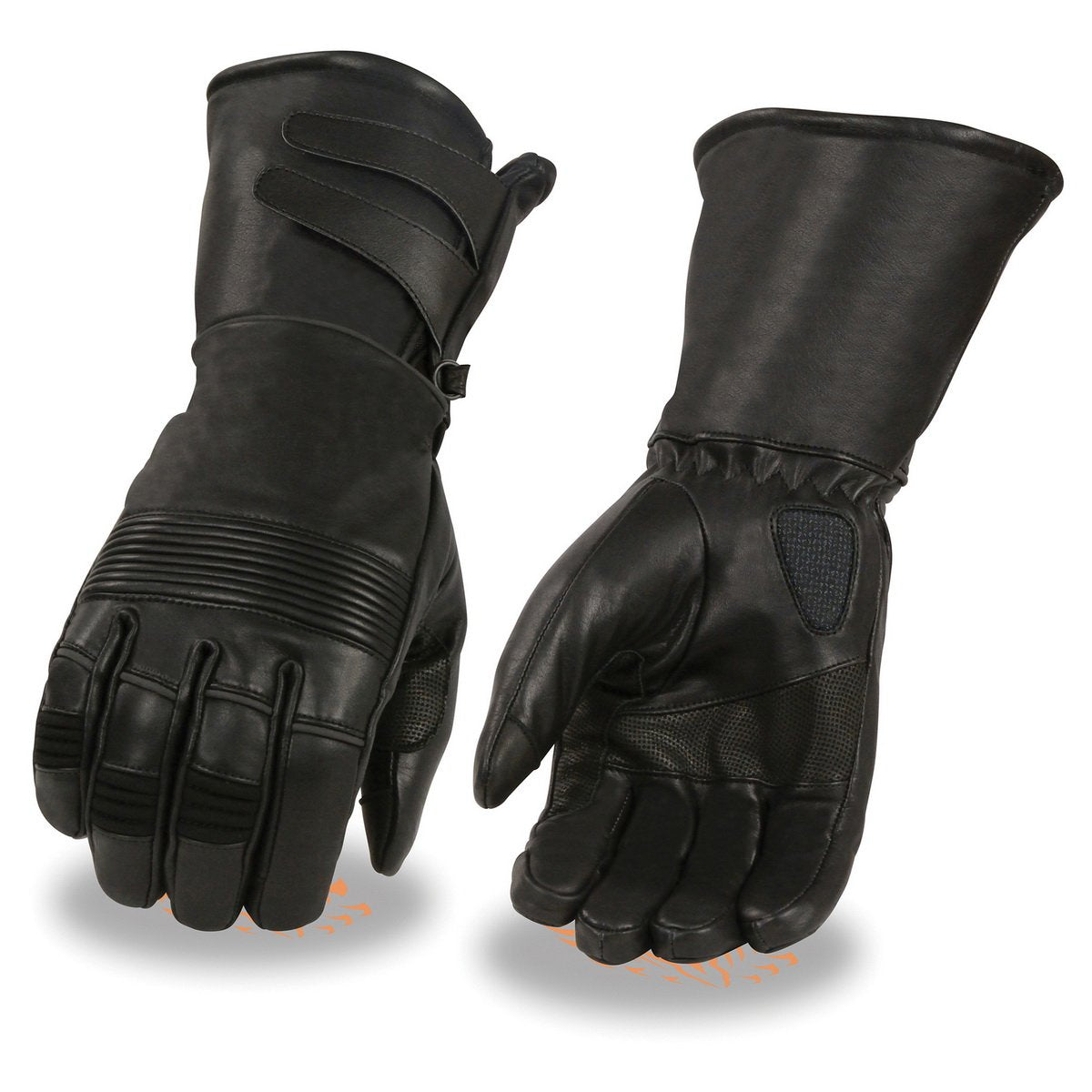
Index and Thumb with i-Touch That Allows The Use of Smart Phone or Other Touch Screen Devices.
View product
Biker gloves are designed with a double layer of leather on the palm to enhance handle control.
View productDoes the cuff work with your jacket?
A glove is part of the riding setup, not an isolated piece of gear. A gauntlet cuff extends farther up the wrist than a short cuff. That can change how the glove meets your jacket sleeve and how much material sits around your wrist. Check the combination in your normal riding position, with your arms extended and elbows bent.
Look for a comfortable transition between glove and sleeve. The cuff should not bind when you bend your wrist, and the sleeve should not push the glove into an uncomfortable position. Decide whether you prefer the cuff over or under the sleeve based on the design and how the two pieces sit together. Recheck the fit after fastening both the glove closure and jacket cuffs.
If you are planning the rest of your setup, inspect the cut and sleeve arrangement of a leather motorcycle jacket alongside the glove you are considering. The product listing can help you review the jacket itself; assess the actual jacket and glove together rather than assuming every cuff combination will feel the same. For more about the broader jacket choice, use the site's jacket product listing as a separate shopping reference.
Which style suits your usual ride?
Think about your regular routes and riding conditions, not only how a glove looks on a product page. A short local trip, a longer highway ride, and warm-weather riding can place different demands on comfort and construction. Coverage may trade off against ventilation, flexibility, or ease of putting the glove on and taking it off.
For warm conditions, read the materials and construction details rather than guessing from a photo. A knuckle feature does not automatically mean a glove will feel too hot, and a lightweight appearance does not establish a particular protection level. The tactical thigh bag listing is an example of a separate carry item to review if you are planning what to bring. Keep storage decisions distinct from the glove's fit and protective features.
Also think through the position your hands hold for most of the ride. If a glove feels comfortable with relaxed hands but restrictive when you reach for the levers, it may not be the right choice. Give yourself time to test those movements while parked. Comfort on the controls is more useful than a feature that looks good but makes ordinary hand movement awkward.
How can you test a new pair before riding?
Do a short, repeatable check rather than relying on a brief glance in the mirror. First, put on both gloves and fasten them as you normally would. Confirm that the closure holds without digging into your wrist. Next, bend and straighten each finger. Look for pulling at the knuckles, pressure at the fingertips, or material folding into your palm.
Then hold the grips in your usual seated position while the motorcycle is parked. Reach for the brake and clutch levers, operate the switches you use, and relax your hands between movements. Notice whether you need to change your grip to compensate for thick seams or a stiff panel. A brief test will not predict how a glove performs in every circumstance, but it can reveal fit and control problems before you head out.
Finally, recheck the glove after adjusting your jacket sleeves. Move your wrists and arms through the range you use on the bike. If the cuff shifts, binds, or leaves you repeatedly adjusting it, pause and reconsider the combination. Make these checks in a safe, stationary setting; do not try to evaluate a new fit while moving.
How can you compare two gloves side by side?
Use the table as a decision aid, not as a rating of any particular model. Record what each listing actually says. A blank or unclear detail is a prompt to investigate, not evidence that a feature is present.
| What to compare | Questions to ask | Why it matters |
|---|---|---|
| Knuckle area | Is a shell, padding, or reinforcement described? What area does it cover? | It helps distinguish a documented feature from an assumption based on appearance. |
| Palm and fingers | Are materials or reinforced areas specified? Can you bend your fingers easily? | These areas affect hand coverage, grip, and control feel. |
| Fit and closure | Does the glove stay in place? Can you move your wrist without pressure? | A secure, comfortable fit matters in ordinary use. |
| Cuff and jacket | Does the cuff work with your jacket sleeve in your riding position? | The combination should feel comfortable when your arms are extended and bent. |
| Riding conditions | Does the construction suit your usual temperatures and ride length? | Comfort and usability can influence whether the glove suits your regular rides. |
| Product claims | Does the listing state a certification or specific protection claim, and provide details? | It prevents assumptions based on a product name or visual design. |
When comparing two models, make two columns in your notes: “confirmed” and “still unclear.” One glove may describe its knuckle feature clearly but say little about the palm or wrist. The other may offer a different cuff or construction. That is a reason to look for the missing information, not to presume that one model includes an unstated feature.
Also compare how the gloves feel after several minutes, not only the first few seconds. Make a fist again, relax your hands, then return to the control position. If pressure builds or the material gathers in the palm, note where and when it happens. Those specific observations make it easier to decide whether a different size or design deserves a try.
What should you check while holding the controls?
Before your first ride in a new pair, sit on the motorcycle with the engine off and take your usual position. Reach for the levers and switches. Close and open your grip. Turn the bars through their normal range and check whether the glove bunches in your palm or presses hard against a knuckle.
Pay attention to the small tasks you do without thinking: making a secure grip, reaching a switch, and moving from the grip to a lever. A glove that makes any of those actions feel clumsy deserves another look. If the glove twists, slips, or shifts its protective feature, recheck the size and closure before riding in it.
Check the jacket and cuff at the same time. Reach forward as you would on the road, then bend your elbows. If a sleeve pulls the glove out of position, adjust the fit while parked. Do not plan to solve a poor fit in traffic.
What should you verify before ordering?
Check the product page for the exact model and size. Confirm the stated materials, cuff type, closure, and protective features. Read the current ordering, care, and return information. Product details and availability can change, so rely on the current listing rather than a general assumption about a brand or glove style.
Use photos to understand the design, but use written specifications for materials and construction claims. A photograph may not show the inside of a glove or identify what a feature is made from. If a detail matters to your choice and is not stated, ask before ordering. It is better to pause than to treat an unclear point as a confirmed feature.
Keep your other carry needs separate from glove selection. A tactical thigh bag listing gives you a separate product to consider if you are reviewing storage options; it does not change the fit or construction of a glove. If you are organizing a complete riding outfit, you can also review motorcycle pant clips as a distinct gear item. Keep the glove decision focused on your hand coverage, fit, and control feel.
What are common comparison mistakes?
- Choosing by appearance alone: A raised panel may look substantial, but the written details matter more than a visual impression.
- Assuming every knuckle feature is alike: Placement and construction vary. Check what the exact product description says.
- Ignoring the palm and fingers: A decision based only on the knuckles overlooks the parts of the glove that contact the controls and move constantly.
- Accepting an uncomfortable fit: Restriction, pressure, bunching, or shifting are reasons to reconsider the size or design.
- Forgetting the jacket cuff: Check the glove and sleeve together in your normal riding position.
- Reading a rating into a product name: Do not assume a certification or performance rating unless the product information explicitly supports it.
- Ordering without checking the details: Verify the exact model, stated materials, sizing guidance, and current store information.
How do you make the final choice?
Start with fit and control feel. Then compare the knuckle feature, palm and finger construction, wrist closure, and cuff. Finally, consider your typical rides and the information provided for the exact glove. If an important point remains unclear, seek an answer before ordering.
A useful comparison has a practical outcome. You know what coverage the listing describes, whether the glove stays comfortable through normal hand movements, and how it works with your jacket. You also know which details remain unconfirmed instead of relying on guesswork.
For broader riding-safety information, consult the National Highway Traffic Safety Administration's resources alongside your product research. A product page can explain its own features, but it is not a substitute for general road-safety guidance.
Shop for motorcycle gloves by checking the details first, then choose the pair that feels secure on your hands and works with your riding setup.
Call to shop motorcycle gloves
Frequently Asked Questions
Do all motorcycle gloves with knuckle protection use a hard shell?
No. Designs vary. Product descriptions may specify a shell, padding, or another form of reinforcement. Check the details for the exact model instead of assuming the feature is hard or built a particular way.
Should the knuckle feature move when I make a fist?
The glove should remain comfortably in place as you move your hand. If the feature shifts away from the knuckle area or the glove twists, check the fit before riding in it.
Can I choose a glove based only on its product photos?
Photos can help you see the design, but they may not reveal materials, construction, or certification details. Read the current product description and ask for clarification when a detail you care about is not stated.
Do I need a gauntlet cuff?
That depends on your preferences and how the glove works with your jacket. Compare the cuff length and check the fit in your normal riding position, with your arms extended and bent.
How can I tell if a glove fits correctly?
It should feel secure without restricting finger movement or causing uncomfortable pressure. Try the controls while parked and confirm the glove stays in position through ordinary hand and wrist movements.
Take a few minutes to compare fit, coverage, and construction before you choose a pair for the road.